Seller and Dealer Model
Understand individual sellers, dealer organizations, dealer members, and administrator boundaries in AutoCore.
AutoCore distinguishes the person who owns a listing from the seller context shown to the marketplace. The listing stores a seller user, a seller type, and an optional dealer profile.
Seller types
The source-backed seller values are individual, dealer, and
authorized_dealer. A dealer member can create a listing attributed to a dealer
only when the service verifies active membership. Verified dealer status maps
the attribution to authorized_dealer; membership alone does not grant that
label.
Dealer organization
A DealerProfile has one owner user, a public storefront identity, location and
contact preferences, verification status, lifecycle status, listings, imports,
media, and optional commercial relationships. Dealer members have one of
owner, manager, or staff roles. Owners outrank managers; managers can
manage staff but not equal or higher roles. Removed or inactive membership does
not authorize dealer actions.
| Boundary | Meaning |
|---|---|
| User identity | Authentication, account status, and platform roles |
| Seller attribution | Listing-level individual/dealer/authorized-dealer context |
| Dealer profile | Organization/storefront and its owned inventory |
| Dealer membership | User’s scoped relationship to one dealer |
| Administrator | Platform moderation and governance; not automatically the listing owner |
Public dealer directory and storefront results require an active dealer. Draft, pending, rejected, suspended, or archived dealer states are not public active storefront states. Detailed Admin workflows belong to a later phase.
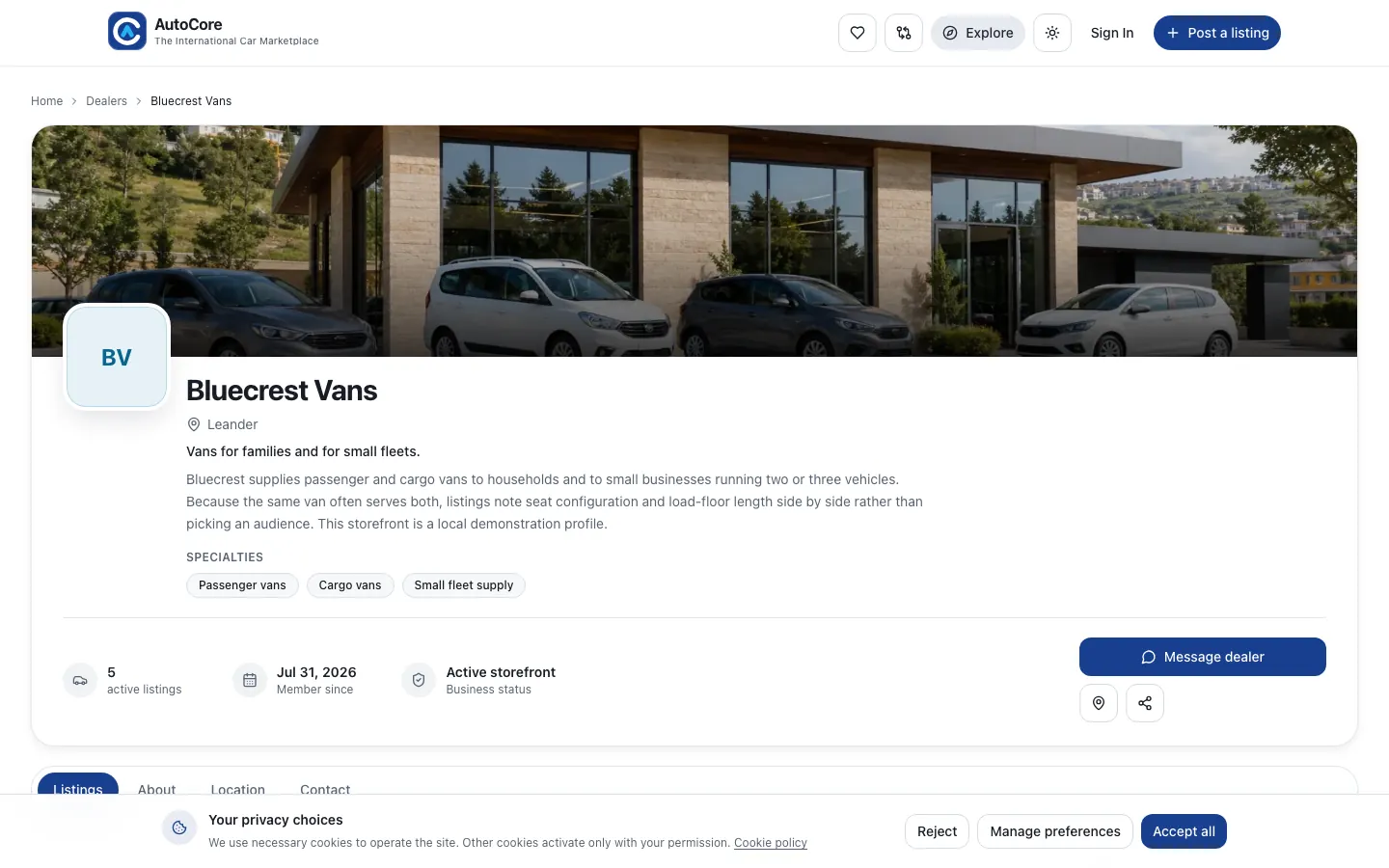
Figure: Anonymous public demo capture using a synthetic dealer profile. Text alternative: the dealer storefront presents organization identity, location, specialties, active listing count, and contact actions without exposing account credentials or private records.