Listing Lifecycle
Follow the source-verified listing states, actions, ownership rules, and public-visibility consequences.
The listing lifecycle is enforced by a pure transition map and action rules in the API. It is service-controlled; it is not a separately deployed workflow engine.
States
| State | Meaning and public consequence |
|---|---|
draft | Owner-editable working record; not public. |
pending_review | Submitted for moderation; owner editing is restricted; not public. |
active | Approved and publicly searchable when category visibility also permits it. |
reserved | Temporarily reserved; not part of the active public-search condition. |
sold | Sale marked complete; retained for history and not current inventory. |
expired | No longer current; can be resubmitted or returned to draft according to action rules. |
rejected | Moderation rejected or changes requested; owner can edit and resubmit. |
archived | Terminal state in the transition map; not public. |
Source-verified actions
Submission moves draft or rejected to pending_review. Moderation can
approve, reject, or request changes. Owners can mark an active or reserved
listing sold, reserve an active listing, reactivate a reservation, or archive a
non-terminal state. Expiry applies to active or reserved records. Owners may
edit only draft and rejected states.
Lifecycle representation
- Owner creates or edits a draft.
- Owner submits it for review.
- Moderator approves, rejects, or requests changes.
- An approved listing becomes active and eligible for public search.
- The owner or system moves it to reserved, sold, expired, or archived.
- Rejected or expired records may return through the review boundary; archived records have no outgoing transition.
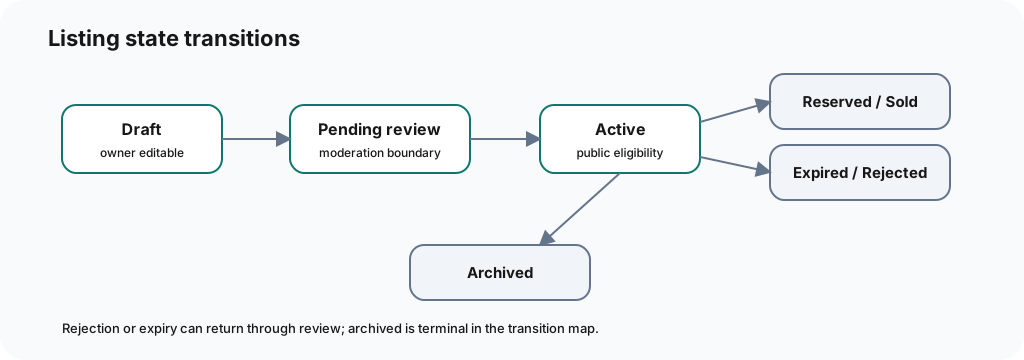
Text alternative: draft moves to pending review, approved records become active when visibility rules permit, and terminal or non-public states retain the listing without making it current inventory.
The listing service also emits audit actions and requests search synchronization after relevant changes. Billing or promotion policy can add separate commercial gates; those do not change the core status enum.